

GPMLS fyrirlestrarröð - Regulated protein metamorphosis

Fróði, Sturlugötu 8
GPMLS fyrirlestrarröðin þriðjudaginn 14. apríl kl. 11:15-12:15 í Fróða, Sturlugötu 8.
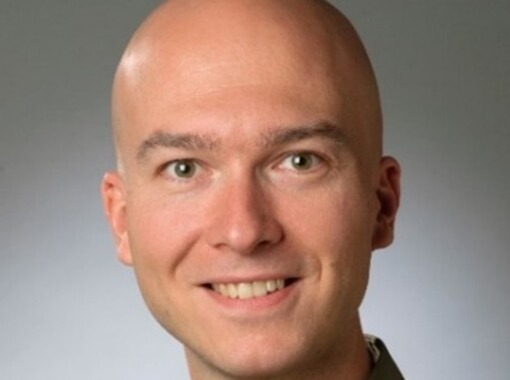
Fyrirlesari: Dr. Alex C. Faesen, Max-Planck Institute of multidisciplinary Sciences, Göttingen, Þýskalandi
Titill: Regulated protein metamorphosis as a master regulated in biology
Ágrip: One of the future challenges in biochemistry is engineering life itself. To achieve that, the initial challenge is to recreate and understand the large, dynamic and bespoke biological machines that orchestrate the fundamental and complex cellular processes. Over the years, we taken an engineering bottom-up approach, where we biochemically reconstituted the machinery of mitosis, autophagy initiation and DNA repair using purified recombinant proteins. This provided a detailed understanding of the architecture, inner workings and ensemble behaviour of these reconstituted machines.
A major surprise of this work was that each are controlled by a new, and highly unusual, class of proteins that function as essential signalling hubs. These proteins – that we named metamorphic proteins – act by reversibly changing between distinct three-dimensional folds. In essence these differentially folded proteins behave as different proteins, and the reversible transition acts as a switch to control the assembly or disassembly of effector complexes. The emerging paradigm is that on-demand acceleration of metamorphosis controls the rate of signalling or in some cases (like autophagy) the assembly of large effector complexes. We have shown that the core principles of this concept are essential in at least cell division, DNA damage and autophagy.
In my GPMLS seminar, I will mainly discuss the unique features of this curious protein behaviour in the context of our most recent reconstitution of the complete autophagy initiation machinery. Autophagosome biogenesis requires the genera¬tion of an enigmatic membrane contact site between the ER and the autophagosome. In cells, these large membrane-contact sites assemble on-demand and establish the flow of lipids into a growing autophagosome, which will eventually engulf it targets and transport it to the lysosome for degradation and recycling. I will discuss how regulated protein metamorphosis controls the assembly of the initiation machinery, and how the cooperativity within several newly discovery complexes is ‘sensed’ as a mature contact site before committing to autophagosome formation at the right place and time.
Bio: Dr. Ir, Alex Faesen studied Biomedical Engineering at the Eindhoven University of Technology in the Netherlands, where he graduated with distinction in 2005. After an Erasmus+ research stay at the University of Dundee, Alex performed his PhD thesis at the lab of Prof. Dr. Titia Sixma at the Netherlands Cancer Institute in Amsterdam. There, he combined biochemistry, biophysics and structural biology to understand the regulation of the activity of ubiquitin specific proteases. In 2012, he moved to the Max-Planck Institute Dortmund in Germany, and worked as a postdoctoral researcher in the lab of Prof. Dr. Andrea Musacchio. With a number of awards, including the EMBO long-term fellowship and Marie Curie Fellowship, Alex was able to perform outstanding research on the biochemistry of cell division, with his findings on the assembly of large protein complexes at the kinetochores published in Nature. At that time, he embarked on the journey to describe the concept of catalyzed protein metamorphosis by characterizing the unique class of HORMA-domain containing proteins, which break the famous “one sequence – one fold” dogma, which was also published in Nature a year later. In 2017, Alex won the highly prestigious MPRGL award from the Max Planck Society, which allowed him to establish his own independent research group in the Max Planck Institute for Multidisciplinary Sciences in Göttingen. Here, he has continued to work on metamorphic proteins and their involvement in various biological pathways, such as cell division, DNA repair, and autophagy.
Dr. Alex C. Faesen, Max-Planck Institute of multidisciplinary Sciences, Göttingen, Þýskalandi