

Málstofa Lífvísindaseturs: The role of gene duplications in generating animal biodiversity

Askja
Stofa N-132
Málstofa Lífvísindaseturs fimmtudaginn 23. janúar kl. 12:30-13:10 í Öskju, stofu N-132
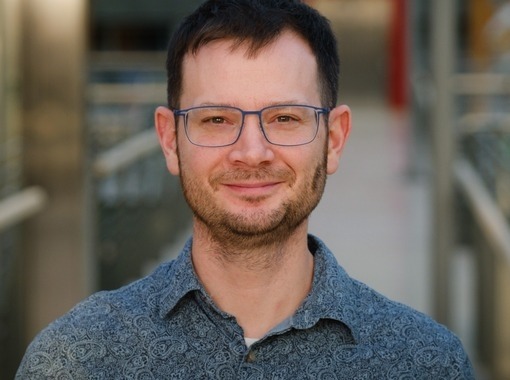
Fyrirlesari: Dr. Adam Ray Smith, rannsóknasérfræðingur á Líf- og umhverfisvísindastofnun Háskóla Íslands
Titill: The role of gene duplications in generating animal biodiversity
Ágrip: Biomedical research in animals is largely performed in a small set of highly-tractable species that offer a broad range of tools for experimental manipulation. For example, zebrafish and medaka can be genetically altered to investigate the function of abnormal alleles discovered in humans, providing powerful systems for investigating disordered genes. However, natural biodiversity in teleost fishes can provide opportunities to turn this question on its head: how does natural selection co-opt seemingly odd gene copies to generate novel and positively-selected phenotypes? In this talk I will describe two systems where gene duplications have created novel copies of otherwise highly conserved genes and explore how evolution has shaped gene sequences, functions, and organismal phenotypes. First, I will describe a study in weakly electric fish, where a specialized communication modality has evolved following selection for a seemingly dysfunctional potassium channel. Following that, I will introduce a new project where we are applying the same principles to investigations of chemokine signaling evolution in the embryonic development of Atlantic salmon.
Dr. Adam Ray Smith, Resarch Specialist at Institute of Life and Environmental Sciences, University of Iceland