

Fyrirlestur Lindsay Ferrara um endurgjöf í táknmálssamskiptum

Veröld - Hús Vigdísar
Stofa 007
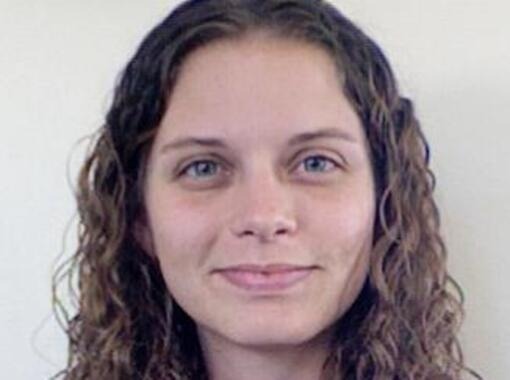
Lindsay Ferrara, prófessor í táknmálsfræðum við Vísinda- og tækniháskóla Noregs (NTNU), heldur opinn fyrirlestur á vegum Rannsóknastofu í táknmálsfræðum þriðjudaginn 12. ágúst kl. 15-16 í stofu 007 í Veröld. Fyrirlesturinn nefnist „Backchannels as multimodal displays of seeing and understanding in signed language interaction: Cross-linguistic insights into NTS and LSFB.“ Hann fer fram á ensku en verður túlkaður yfir á íslenskt táknmál.
Útdráttur
Backchannels as multimodal displays of seeing and understanding in signed language interaction : Cross-linguistic insights into NTS and LSFB
This study investigates how deaf signers from two historically unrelated, minority signed languages (SLs), Norwegian SL (NTS) and French Belgian SL (LSFB), signal understanding through backchannels. Backchannels (BCs) allow addressees to provide positive feedback in conversation to signal understanding and attention. They include short vocal (e.g., mm mm) and visual cues (e.g., head nodding, facial expressions) or a combination of both. While most research on BCs stems from spoken languages, little is known comparatively about BCs in signed discourse. This presentation addresses this gap by analyzing BC production in the discourse of 40 deaf signers of NTS and LSFB (20/language), offering key cross-linguistic insights into 4,671 tokens of BCs in two under-documented SLs. Building on previous work (Bauer et al. 2024), ELAN was used to annotate BC forms (e.g., manual/non-manual; the bodily articulators used) in 4 hours of face-to-face dyadic conversational data from the NTS and LSFB Corpora. Annotations were then subjected to multivariate statistical analysis in R. Findings reveal similarities and some differences across both SLs. BCs were primarily performed non-manually, showing limited variation in the range of articulators used. Head nods stood out as the most robust form in both SLs, confirming recent work (Bauer et al. 2024) and supporting the idea of nodding as a “canonical universal human response token” (Lutzenberger et al. 2024). However, inter-individual variation in BC styles was also observed. This revealed different individual patterns among NTS and LSFB signers, from a BC style using a diverse range of non-manual cues including head moves to a style relying more on the hands. These differences may be linked to contextual factors and signer personalities, independently of SL. Ultimately, this work emphasizes the importance of investigating interactional phenomena at the heart of language such as BC from a multimodal and cross-linguistic perspective.
Um fyrirlesarann
Lindsay Ferrara is Professor of Signed Language Linguistics at NTNU, Norwegian University of Science and Technology. She conducts both empirical and theoretical work on the semiotics of signed languages with a focus on the meaning-making that happens in various language ecologies and interactional settings. She is also interested in language documentation and currently holds a Young Research Talent Grant from the Research Council of Norway to create the first corpus and lexical database of Norwegian Sign Language.
Lindsay Ferrara, prófessor í táknmálsfræðum við Vísinda- og tækniháskóla Noregs (NTNU).