


Málþing í tilefni af 25 ára afmæli Medieval Nordic Text Archive
Edda
Fyrirlestrasal
Miðaldastofa Háskóla Íslands og Stofnun Árna Magnússonar í íslenskum fræðum efna til málþings í tilefni af 25 ára afmæli Medieval Nordic Text Archive (MENOTA).
Fimmtudaginn 10. september 2026 kl. 13.00–17.00
Fyrirlestrasal Eddu (103) — Edda Auditorium (E-103)
Dagskrá:
13:00-13:15: Opening
Guðrún Nordal, director of the Árni Magnússon Institute for Icelandic Studies
Beeke Stegmann, chair of Menota
13:15-14:15: MENOTA’s first 25 years
Chair: Haraldur Bernharðsson
Odd Einar Haugen, University of Bergen: Menota at 25: Versatility, Fairness and Endings
Paul Maurer, University of Bergen Library: Annotating and exploring Medieval Nordic texts
14:15-14:45: Coffee break
14:45-15:45: MENOTA’s future
Chair: Peder Gammeltoft
Tarrin Wills, University of Copenhagen : Extending the Menota ‘Model’
Beeke Stegmann, Árni Magnússon Institute Menota’s role in Old Norse Studies
15:45-17:00: Reception
Málþingið fer fram á ensku og er öllum opið.
The event will be streamed [here].
The event is made possible by financial support from the Danish-Icelandic Working Group on Old Icelandic Manuscripts, the University of Iceland and Miðaldastofa Háskóla Íslands.
Efniságrip:
Odd Einar Haugen
Menota at 25: Versatility, Fairness and Endings
Menota has by now developed into a comprehensive archive of Medieval Nordic texts having amassed more than two million words. Menota offers texts on up to three levels of representation (facsimile, diplomatic and normalised). In addition, many texts present parallel photographic facsimiles and partial or full morphological annotation (one million words). Two texts even provide a parallel translation sentence by sentence as well as a full syntactic dependency analysis. Recently, the archive has been extended with several Menota-related projects. As Menota continues to grow, attention is also being given to advancing its alignment with the FAIR principles and supporting its long-term continuity.
Odd Einar Haugen is professor emeritus of Old Norse Philology at the University of Bergen. He was among the founders of Menota and MUFI in 2001 and is the general editor of The Menota Handbook.
Paul Meurer
Annotating and exploring Medieval Nordic texts
Korpuskel is an application for annotating, exploring and displaying encoded texts in general and the texts of Menota in particular. Since 2005, the interface of Korpuskel has been extended to show paginated text, to display photographic facsimiles and corresponding translations, and to link each word in a text to its morphological annotation and a corresponding dictionary entry. Full syntactic dependency analyses, which some texts are equipped with, can also be shown. With the integrated Menota Lemmatization Assistant (MLA), normalization, lemmatization and full morphological annotation of a text can easily be performed in a semi-automatic manner.
Paul Meurer has been working in the fields of computational and corpus linguistics since 1996. He is employed at the Bergen University Library.
Tarrin Wills
Extending the Menota ‘Model’
Menota treats medieval texts as unique and manuscript-based, while adding a corpus linguistic layer. This powerful model can be extended to make use of new technologies and interface with new standards, such as automatic text recognition, spatial analysis of the manuscript page, and analysis of variation. These technologies can help in both the digitisation of Nordic manuscripts and their publication. This presentation demonstrates how Menota’s core model can be adapted to these innovations, highlighting practical applications from the MenotaG application and the Editiones Arnamagnæanæ Electronicæ digital series to show what the future holds for preserving and exploring medieval text collections.
Tarrin Wills is head of the Dictionary of Old Norse Prose at the University of Copenhagen. He has led and co-led digital editing and standardisation projects in Old Norse and related fields including the Skaldic Project, MUFI and EAE.
Beeke Stegmann
Menota's role in Old Norse Studies
Menota plays a central role in preserving and publishing digital transcriptions of Old Norse texts, and its encoding has become a de facto standard in the field. As the archive grows, so does its visibility and scholarly value. Its open-source policies have for instance supported numerous peer-reviewed publications and its data have been used to train an HTR (Handwritten Text Recognition) model. Scholars and the wider public regularly consult Menota’s editions. To sustain this momentum in an increasingly digital field, we aim to keep the threshold for including new texts and recruiting new contributors low.
Beeke Stegmann is Associate Research Professor at the Árni Magnússon Institute for Icelandic Studies in Reykjavík. She is currently the chair of the Medieval Nordic Text Archive — MENOTA.
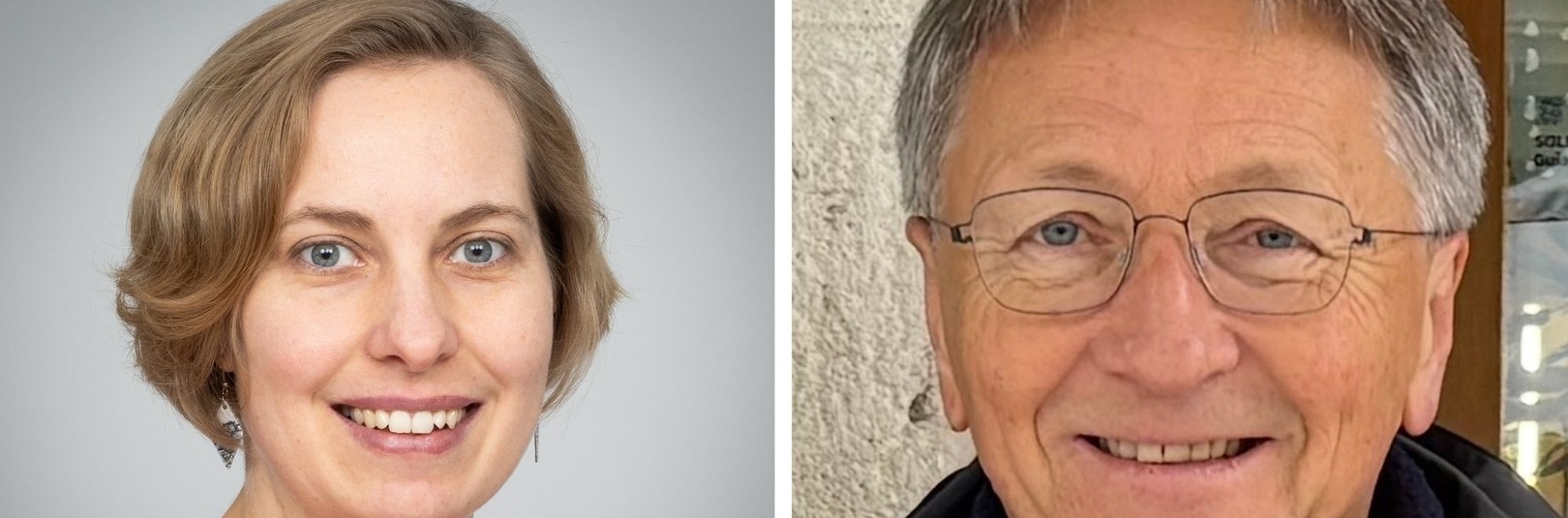
Beeke Stegmann, Odd Einar Haugen, Tarrin Wills og Paul Meurer.
